

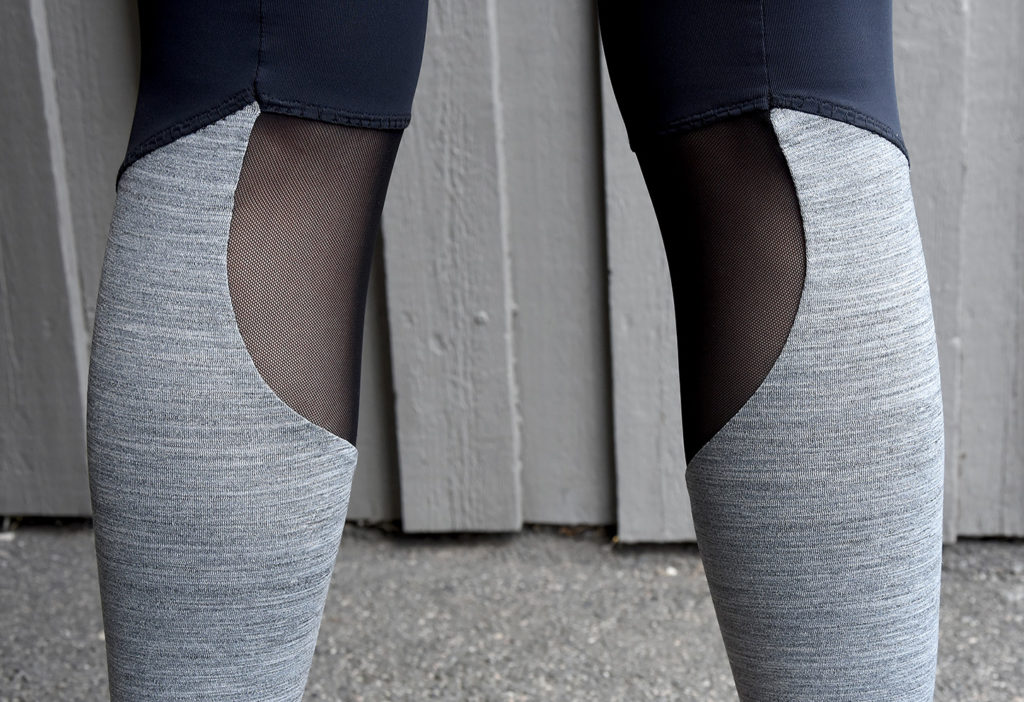
I love adding mesh inserts to my garments! Even more so than I thought, which I realized when I began looking through my archive for photos of projects with mesh inserts.
Anyways, through trials and tribulations I’ve learnt a few tricks and tips when it comes to sewing mesh inserts. So here is a primer of how to sew mesh inserts on garments.


Mesh inserts are great for areas where you transpire
Placing them under the arms, in the back or behind the knees are great ways to utilize the breathing properties of mesh
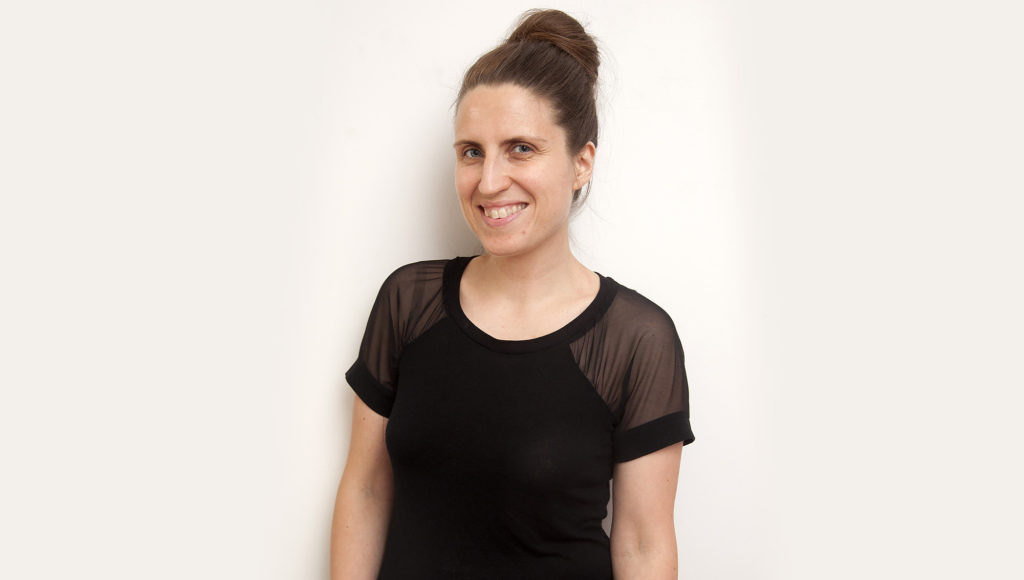
Softer mesh is usually better for inserts
If you are adding mesh to a knit garment, the mesh should have the same properties, i.e. being soft and stretchy. For this silk jersey a soft mesh for the ruched sleeves was perfect, as it drapes nicely
Sew mesh seams with a serger or a stretch stitch on a regular sewing machine
Mesh is actually quite easy to sew, just make sure it doesn’t get stuck or jammed. It can also slip so basting first is a good idea.
Hemming mesh is however hard
Softer mesh tends to get stuck in the machine, so don’t try to stitch over it. If you place the mesh inserts around the knees or under the arms that won’t be an issue, but if the mesh is closer the ends of the garment, you could consider the following options:
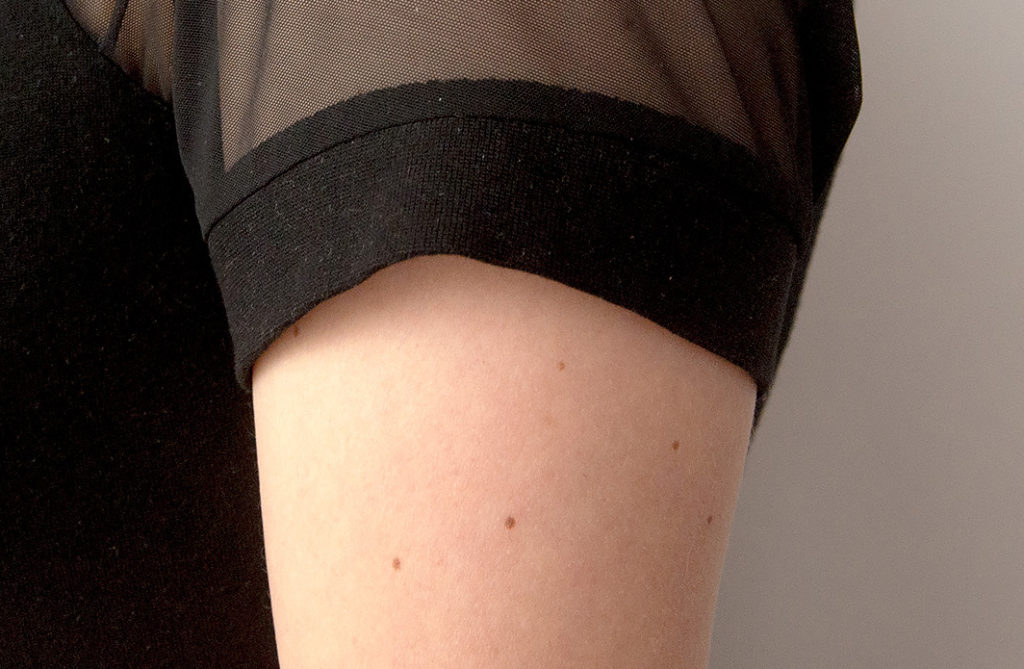
Finishing the mesh with ribbing

Binding or fold-over elastic to cover the mesh edges
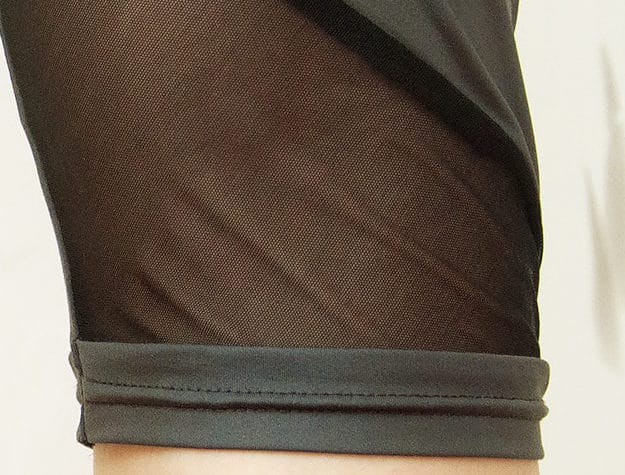
Using small fabric edges for the hem
Here I added a small strip of fabric that I hemmed with a coverstitch. Was a bit fiddly but worked okay
Stitching down (topstitch) the mesh seams is a good idea
In the above photo I stitched the mesh seam with the wrong side of a 3-thread coverstitch seam. Seams can flop back and forth as we all know, and if the fabric is sheer they will be visible from the outside. So for the best result, stitch down the seams. However, this might cause the fabrics to stretch out, so I recommend using a coverstitch, twin-needle stitch, a walking foot, a sewing machine stretch seam or some other method to keep the fabric in check.
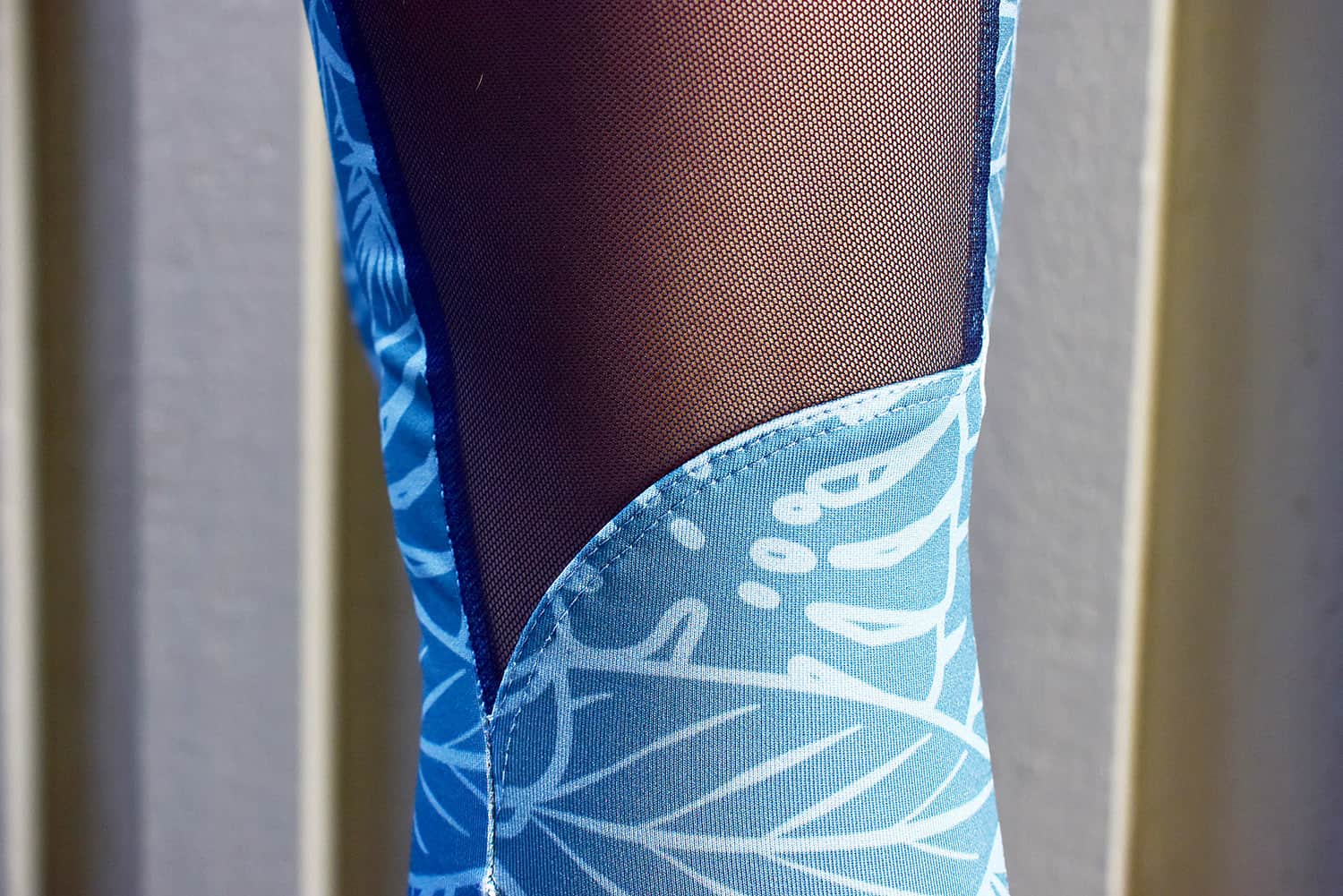
Mesh stitched down with a coverstitch machine
Mesh stitched down with a stretch stitch on a regular sewing machine

Mesh stitched down with a reverse 3-thread coverstitch
Be careful not to damage the mesh when sewing
Power mesh is generally very durable, but when you are sewing mesh it’s often exposed to sharp objects such as needles and scissors, which can cause tiny holes in the mesh. This happened on my latest mesh project, which was heartbreaking to say the least, because I didn’t discover the hole until the garment was finished. So I had to mend it by hand.
So that’s was my guide to sewing mesh inserts on garments. If you have any more questions, just ask them in the comments and I’ll do my best to answer!

19 Comments
PsychicSewerKathleen
Thank you Johanna! Great tips – I love the look of mesh too – not just on athletic wear. Can really spark up a plain shift or Tee and as you say too make it much cooler (which I like a LOT) 😉
Johanna
Agree, they really lift the look of a simple garment and there are so many mesh colours and versions out there these days, so the possibilities are endless!
Summerflies
Thanks for these great tips. I love all your mesh inserts. Your active wear looks so professional. I also like to learn from others hard work.
Johanna
Thank you! I do try my best to make it look somewhat similar to ready to made garments, without having access to professional tools. Sometimes it works out and sometimes not, but it’s the process that counts hopefully 🙂
Marianne
Hi Johanna, where do you buy your supplies in Sweden and what is mesh called in Swedish? Thanks
Johanna
Here are the best resources:
http://agstextil.se/default.aspx
http://www.bwear.se/
It’s called mesh in Swedish too or stretch-nät sometimes
Casey Dubbs
I am havin a hard time with mesh inserts on a leotard for my daughter. I am using a serger and after a few wears, fine elastic fibers are fraying from the mesh on the seams. Where the mesh meets the spandex it barel occurs, but the seems that are mesh to mesh are all hairy. What am I doing wrong?
Johanna
Hmm, I usually attach mesh to spandex, so I have’t experience this. Do you use proper power mesh? That is more durable than the softer Helenka mesh which have frayed a bit for me too. Apart from that I’m not sure really, but I suspect that dance fabric sellers could offer some suggestions
Cora Copelan Lee
Once this happens, do you know the best way to “trim” them? This happens with a lot of my daughter’s dance leotards. It really takes away from the look of the leo!
Tiny correction
Per-spire, not tran-spire (unless you are a member of the plant kingdom) 😉
76Moises
Hello blogger, i must say you have hi quality
articles here. Your page can go viral. You need initial traffic boost
only. How to get it? Search for; Mertiso’s tips go viral
Karey
Thanks for these tips. When I cycle in cold weather some parts of my legs need protection (eg thighs & calves so they are warm enough to work properly, ankles & knees cos they stay cold) while other bits get hot quick. Mesh inserts solve it. Just need to take notes when I’m on my bike so I remember where I need to put what lol.
Johanna
Agree! I too get hot very easy in some places so it’s really nice to get ventilation in those places. Plus there are many forms of mesh out there these days, some with better coverage too, such as sports mesh
Angela Cooper
Can this be done by hand? I’m a pretty good hand sew(er) but I know nothing about sewing machines but I wanna add mesh to my yoga pants that I bought that’s a bit too conservative for my taste.
Johanna
I would think that is possible. Hand stitching has some good stretch and with small enough stitches I say it could work since mesh won’t ravel!
Nicole
Can you double the layers of mesh in a panel to make it less see through? it is for a dress with panels on the side under the arm where you can see your bra.
Comments are closed.